Home » Body Hair Transplants

Body Hair Transplants

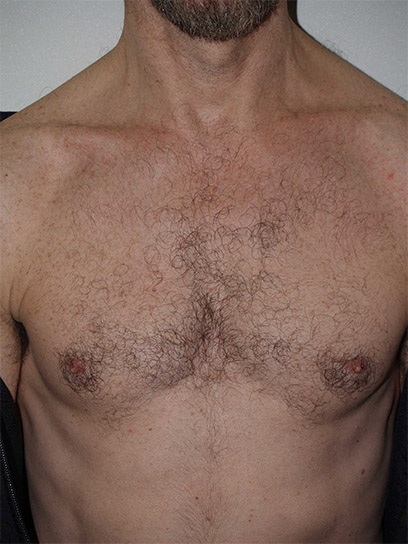
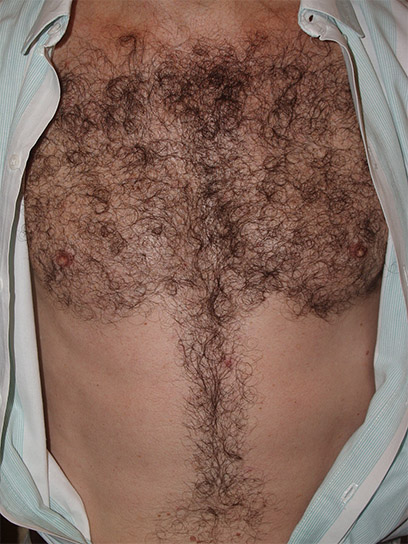
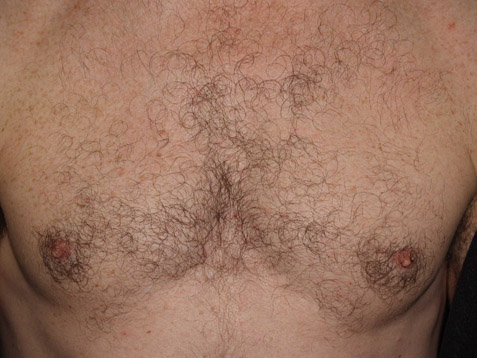
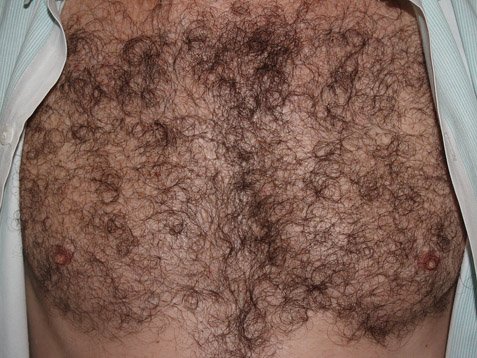
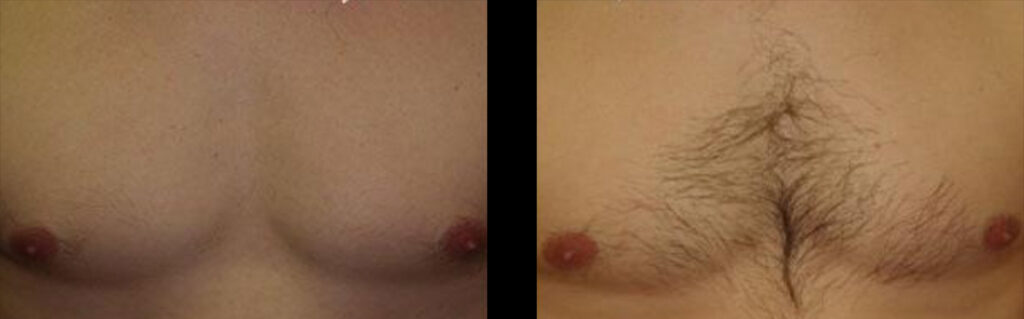
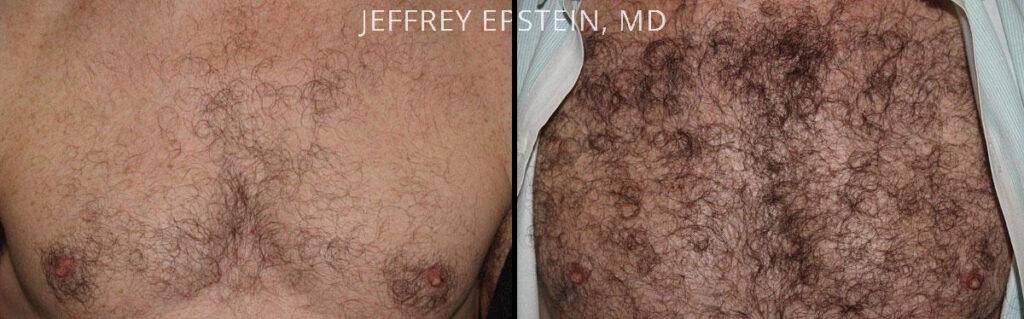
Absolutely. Typically a procedure of anywhere from a few hundred grafts to over 3,000 hair grafts can create chest hair or other body hair where there was not hair before. Of course, it is important that the surgeon create recipient sites typically in a cross patch pattern to provide the most deliberately irregular pattern of growth for the hairs. If the chest hair growth pattern is too regular, than there is a chance it will appear unnatural. It is important that the surgeon create a very irregular pattern of growth in order for the hairs to look the most natural.

I was wondering if anyone would know that the money well spent on my beard transplant, and driving expenses would be considered a medical write off for my 2009 taxes? I really appreciate the input... I live in SC if that makes a difference.

Thanks, George

Hair transplants can effectively restore hair to the beard, or any other desired area.  For the tax implications, you need to speak with an accountant or other tax expert.  Some health savings plans do allow for withdrawal for cosmetic surgery procedures.

Posted by Jeffrey S. Epstein, MD, FACS

Question:

How effective are hair transplants in African American Ethnic patients?

Answer:

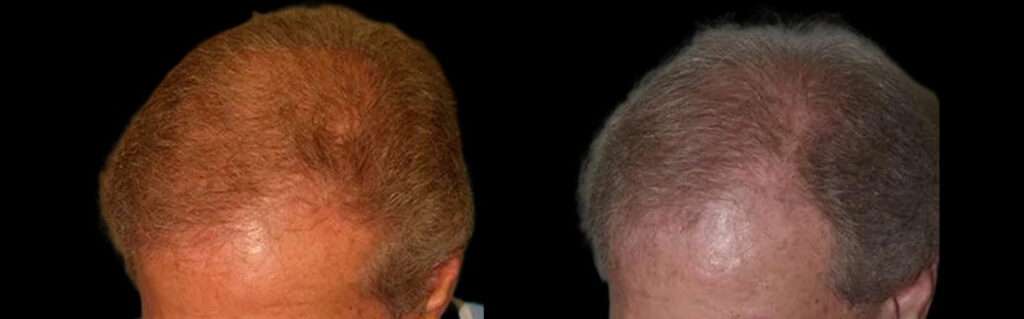
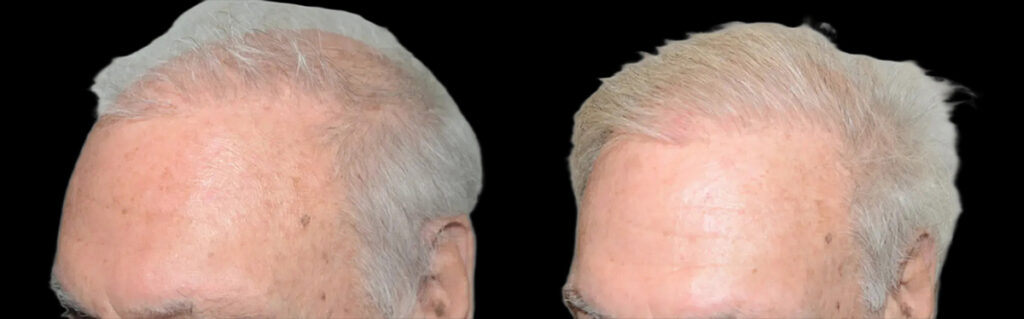
Like in all other ethnic groups, hair transplantation in individuals of African-American or other African ethnicity is a procedure designed to restore permanently growing hair to areas of hair loss.  The donor hairs come from the back and sometimes sides of the scalp, where a single donor strip is removed then the incision sutured closed.  Once transplanted, the hairs first fall out at 2 to 3 weeks, then for the next 3 months, the scalp looks essentially like it did prior to the procedure.  Three to four months later, the hairs will begin to grow, and over the next year the density will gradually increase as more and more of the hairs grow to their normal density and length.


There are however unique differences when working with the typically more curly hair- some advantageous, some disadvantageous, while others are just what they are.  For advantages:  because the hairs are curly, larger grafts can be used, many containing 2 to as many as 5 hairs, without compromising naturalness- this means more hair coverage per graft.  Naturalness in general is the easiest to achieve with these curly hairs.  The disadvantages:  because the grafts are inherently larger due to their curl, they cannot be placed as closely together and fewer grafts are able to be transplanted in a single procedure.  This often means that patients will desire a second procedure 8-plus months later to achieve greater density by placing the second round of grafts between the prior placed original grafts.  The other disadvantage is a greater risk of donor site detectability- the scar itself typically heals as a fine line, but for some reason the curliness of the hairs results in some patients in a slight parting of the hairs from both sides of the incision, something that can be detectable when the hair is cut short.  Once the procedure is performed, patients are unable to shave the hair short, otherwise the donor site will be visible.

There are few risks with the procedure, and most are those associated with standard hair transplants.  The donor site incision typically heals as a 2 mm wide incision, easily concealable with hair that is cut with anything longer than a razor with a #2 or #3 guard.  Hair growth seems to be not as reliable in certain cases, especially in women who have a combination of traction alopecia (from tight hair pulling due to certain hair styles or from the application of hair extensions and weaves) and genetic hair loss, with often another etiology of the hair loss which can sometimes be difficult to diagnose.  It is for this reason that Dr. Epstein will sometimes suggest a test procedure of 30 or so grafts to assess after 4 to 6 months the rate of hair growth before the undertaking of a larger definitive procedure.

Finally, despite the curliness of the hairs, transplantation of the beard and eyebrows is possible amongst individuals of this ethnic group.  Similarly to transplantation of the scalp, a smaller number of grafts are utilized than that used in other ethnic groups.

Most of our patients travel from out of town to have it performed on a fly in/fly out basis.  The entire procedure can be scheduled by phone and email, with Dr. Epstein, or one of the other Foundation for Hair Restoration doctors, able to evaluate photos sent by the patient.

Posted by Jeffrey S. Epstein, MD, FACS

Dear Dr. Epstein,

I'm considering a chest hair transplant, but first I have a question to you.
Do clients sometimes complain, after an operation, that they are too hairy on that body part, in comparison with their legs and arms?
Thank you, and congratulations on your work.

Question:

Did you say you were using the back of his head as a donor for this project?
head hair keeps on growing long without a haircut and at least in my case, its straight with no curl or wave like a leg hair or pubic hair. Does this mean your client will make friends with a beard trimmer so he wont have long bushy chest hair?
Please explain. I am considering this.

Answer:

Thank you for your question.  Yes, scalp hair is used as the donor hair.  Therefore, these hairs need to be trimmed every 2 weeks or so.  For most patients, once scalp hair is transplanted into the chest, it actually starts to grow more like chest hair, becoming a bit kinky, so that it looks quite natural.

Hope that helps.

Posted by Jeffrey S. Epstein, MD, FACS

Question:

Dear Dr Epstein

I would like to know if you offer hair transplant repair using chest hair. I have already had a sample of 100 chest hair grafts transplanted to the scalp and it has been growing well for 16 months now. The maximum length it reaches is about 3 inches and the color matches my scalp hair. I will be happy to send you pictures in due course but initially I would like to know if this is a procedure you offer and the cost.

Thanks

Kevin


Answer:

Dear Kevin-  Yes, in those patients with good chest hairs, I can transplant as many as 750 or more in a single day’s procedure.  It is nice to hear that you have had successful results with your test procedure, and would be happy to have you as a patient.  Go ahead and send some photos my way, and please expect Jon from my office to contact you.

Posted by Jeffrey S. Epstein, MD, FACS

I had a prior chest transplant surgery of 2000 grafts.  It was a really bad experience.  My goals are:

1. Much more density
2. No spots or scars on my chest.
3. No curly transplanted hair (my chest hair is limp)
4. No gray hair transplanted
5. No incisions (a FUE procedure)
6. Abdomen hair/pubic hair as donor hair (crown/back head hair is thicker)

Please tell me: can you offer a solution according to my goals?  How many grafts do I need?  Thank you very much for your feedback.

I had ~4000 grafts to the chest mid-August '08 with no significant discomfort other than some itching about 1 week later as the grafts healed.  The procedure itself was no big deal and virtually painless. Many of the hairs fell out after a few weeks but several stayed and the only noticeable change was a few small bumps here and there where the implanted grafts were placed. Some of the new hairs started growing in around 2 1/2 months and many more by 3. It's going on 4 months now and there's noticeable change in the overall appearance.

Question:

Transplant to the chest and other body areas - How is it performed, and How successful is it?

Answer:

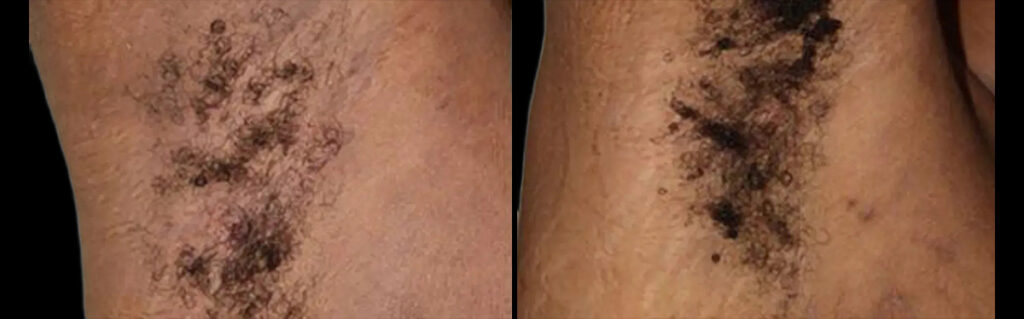
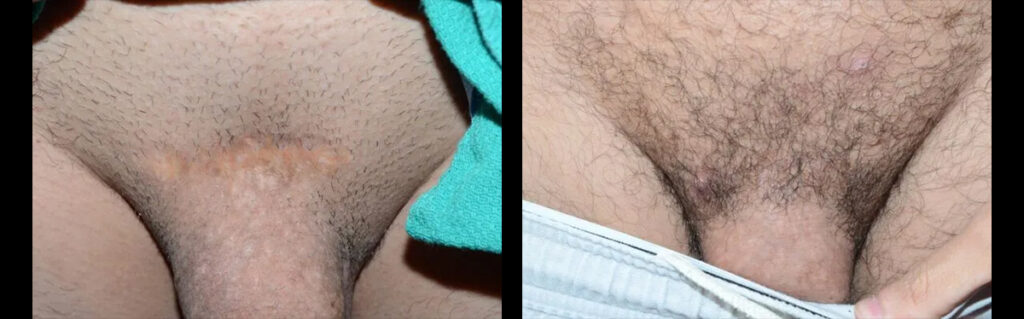
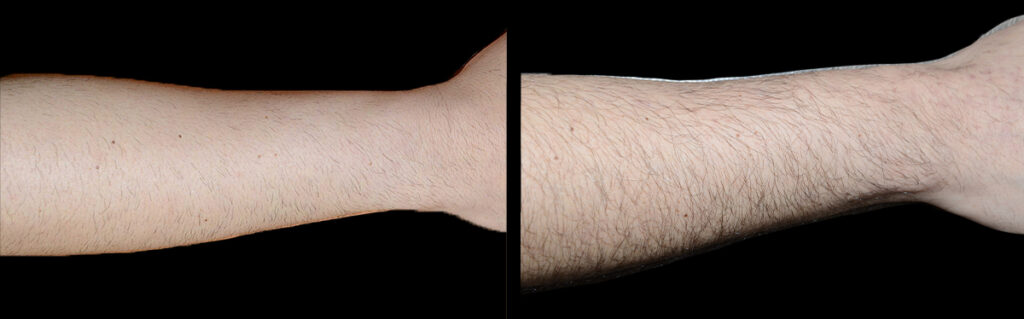
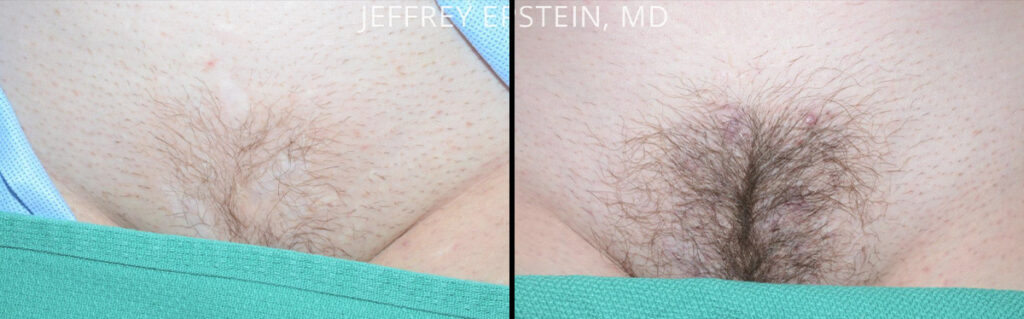
Body hair transplantation is a procedure designed to restore hair most commonly to the chest and abdomen area, but can also be applied to the pubis, axilla, and any other area hair is desired, to both thicken the existing hair or to provide hair growth where there is none.  The absence of hair could be due to genetics, prior electrolysis or laser hair removal, or even trauma due to surgery, burns or other types of accidents.  Some patients seek to have restored only a thin amount of coverage or filling in of a limited area (i.e. central chest or pubic triangle), while others desire a thick chest and central abdomen area-  for these cases desiring maximum density, a second procedure typically needs to be planned for. 

The donor hairs come from the scalp, which typically grow like normal body hair in their texture and other characteristics, with one exception- they continue to grow as if they were on the scalp, and therefore need to be trimmed typically monthly.  Once transplanted, the hairs are permanent..  To provide a completely natural appearance, the hairs are transplanted as one and two hair grafts, the natural way body hair grows.  Other steps taken to assure naturalness include the careful placement of the grafts at the exact correct angle and direction, the use of all-microscopically dissected grafts that can be placed in the smallest possible incisions so as to minimize scarring, and even the aesthetic distribution of any existing gray hairs into the restored areas.  Note that these hairs transplanted into the body are no longer available for transplanting into the scalp if the patient desires to undergo restoration of any male pattern hair loss that may develop in the future, thus meaning that there will be fewer hairs available for this area.

A procedure typically involves the placement of 200 to as many as 4000 + one and two hair grafts, depending upon the desired density and the size of the areas to be covered.  Performed usually under a mild oral sedative, the 3 to 6 hour procedure is essentially painless, as is the recovery period.  The only exception is when filling large areas of the chest, the anesthetizing process can be somewhat uncomfortable, therefore some patients choose to have it performed under intravenous sedation under the supervision of an anesthetist in Dr. Epstein’s accredited procedure room.  For the first 5 days after the procedure, tiny crusts are around each transplanted hair.  By the second day, patients are able to return to normal activities with the wearing of a shirt or other concealing clothing, without any sign of having had a procedure.  Sutures that are placed in the donor area are removed at 10 to 12days.  The transplanted hairs fall out at around 2 weeks, then start to regrow at 3 months, where they will continue to grow for a lifetime.

There are few risks with the procedure, and most are those associated with standard hair transplants.  The donor site incision typically heals as a 2 mm wide incision, easily concealable with hair that is cut with anything longer than a razor with a #2 or #3 guard.

I had ~4000 grafts to the chest mid-August '08 with no significant discomfort other than some itching about 1 week later as the grafts healed.  The procedure itself was no big deal and virtually painless. Many of the hairs fell out after a few weeks but several stayed and the only noticeable change was a few small bumps here and there where the implanted grafts were placed. Some of the new hairs started growing in around 2 1/2 months and many more by 3. It's going on 4 months now and there's noticeable change in the overall appearance. Looks like most if not all of the grafts are going to take. My thanks to Dr. E and crew for an easy and almost pleasurable procedure. Updates to follow!

Posted by Jeffrey S. Epstein, MD, FACS

  Email us below to schedule a
free consultation, or call us at
800-370-2883
 
CONTACT US NOW


Issues, Problems & Procedures
Follicular Unit Micrografts (FUM)
High Forehead - Hairline Lowering
Hair Transplant Repair
Scar Reduction
Women's Hair Loss
 
Upcoming Events
 
Follow Us on Facebook