Most consultations about robotic hair transplantation start the same way. The patient sits across from me in Miami, runs a hand over the back of their scalp, and says something like, “I’ve been reading about the ARTAS robot.” Then a pause. What follows is rarely a technical question.
They want to know if the machine is smarter than a surgeon’s hands, whether anyone will notice, and, almost always, whether they’ll look like themselves afterward. I listen. I examine. And I give them an honest answer that depends entirely on what their scalp tells me, not on what the marketing brochure promises.
I don’t start with the robot. I start with the donor area.
Donor area evaluation and candidacy
Under magnification, the back and sides of the scalp reveal everything I need to know before any device touches the skin. Donor density is the first variable.
I’m looking for follicular units per square centimeter, and I want to see consistent groupings of two, three, and four-hair units. When density drops below a certain threshold, no technology compensates for that deficit.
Hair caliber matters almost as much. Fine, light-colored hair behaves differently under robotic imaging than coarse, dark hair.
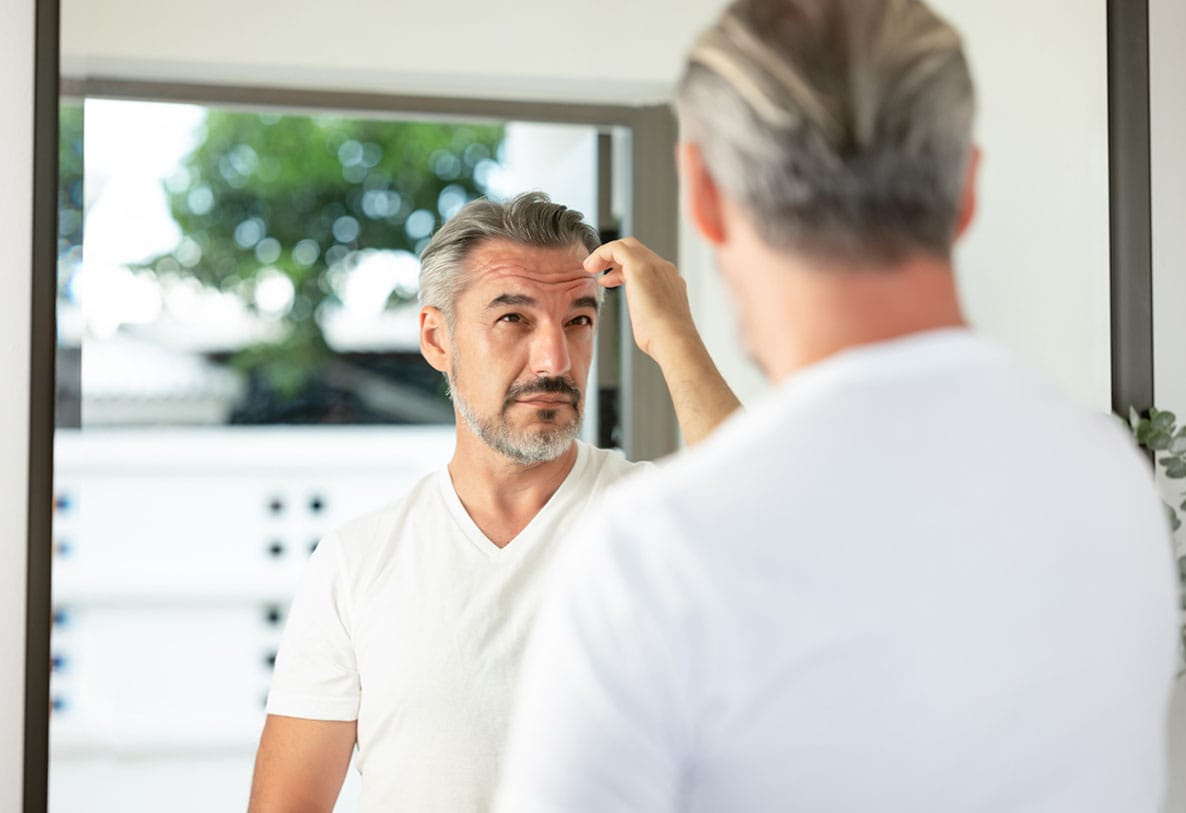
The ARTAS system’s optical guidance relies on contrast between hair shafts and surrounding skin. Patients with very light blonde or gray hair present a recognition challenge for the robot’s cameras, and in those cases, I often shift to manual Follicular Unit Extraction without hesitation.
Scalp laxity, previous surgical scars, and the patient’s Norwood classification all factor in. A Norwood 6 with a thin donor zone is a fundamentally different case than a Norwood 3 with robust reserves.
I’ve turned away patients who were told elsewhere they were “perfect candidates” for robotic FUE, only to find under trichoscopy that their donor area had already been over-harvested in a prior procedure. Scar tissue from strip surgery changes extraction angles and increases transection risk.
Diffuse unpatterned alopecia is the scenario that concerns me most. If the donor area itself is thinning, extracting from it can accelerate a problem the patient came to fix.
Robotic-assisted follicular extraction and graft placement
The patient lies face down on a specialized chair. I calibrate the ARTAS system, which uses a dual-punch mechanism and high-resolution stereoscopic cameras to map follicular unit positions, angles, and spacing across the donor zone. The robot creates a digital map before making a single extraction.
Each punch is guided by algorithms that calculate depth and angle in real time. This is where the technology genuinely excels: consistency of punch depth across hundreds or thousands of extractions. My hand doesn’t fatigue. The robot’s doesn’t either.
But the comparison ends there, because the robot can’t assess tissue quality mid-extraction the way I can. If I notice a shift in skin tension or a cluster of grafts that are sitting shallower than expected, I intervene manually. The system is a tool. It doesn’t make surgical decisions.
I’ve seen clinics market ARTAS procedures as if the surgeon’s role is peripheral. That’s a dangerous misconception in robotic hair restoration. A robot operated by an inexperienced surgeon produces mediocre results, and the patient pays the price in transected grafts and unnatural distribution. The technology doesn’t rescue poor judgment.
After extraction, my team and I inspect every graft under magnification. Damaged or incomplete follicular units get set aside.
Graft placement into recipient sites is done entirely by hand, because the artistry of hairline design, the angle of each slit, the density gradient from frontal to mid-scalp, none of that can be automated. I create recipient sites at acute angles that mimic natural growth direction, following principles central to follicular unit micrografting. A millimeter of difference in angle changes how the hair falls across the forehead.
I remember a patient from São Paulo, maybe five years ago, who came in after a robotic procedure performed at another clinic. The extractions were clean. The placement was a grid. Rows of hair pointing straight out from the scalp like fence posts. That case took two corrective sessions to address.
Transection rates with ARTAS, in experienced hands, run between 5 and 8 percent in my cases. That number climbs when the operator doesn’t adjust parameters for individual tissue characteristics.
Session planning and graft allocation
Graft distribution determines whether a result looks full or just filled. I spend more time on allocation planning than on any other phase of the procedure.
Patients ask me whether they should get as many grafts as possible in a single session. The instinct makes sense, but the biology doesn’t always cooperate.
Pushing beyond what the donor can safely yield in one sitting risks a moth-eaten appearance in the back of the head that no hairstyle conceals. I plan sessions around what the donor can give without visible compromise, not around what the patient wants to receive.
For patients with progressive loss patterns, I stage procedures across two sessions separated by eight to twelve months in some cases, though timing varies by individual. The first session establishes the hairline and frontal third.
The second addresses the mid-scalp and crown, once I can evaluate how the first round of grafts has matured and whether the native hair behind them has continued to thin. Combining ARTAS extraction with PRP therapy between sessions supports graft survival and may slow ongoing miniaturization in surrounding native hair.
In cases where donor supply is genuinely limited, I sometimes combine robotic extraction from the scalp with body hair from the chest or beard. Beard hair, in particular, has a thicker caliber that works well for adding density to the crown. The ARTAS system handles scalp extraction while I manually harvest body hair, each source contributing where its characteristics match best.
Allocation is not democratic. The hairline gets the finest single-hair grafts. The mid-scalp gets two and three-hair units. The crown, if addressed at all in the first session, gets the thickest groupings. This hierarchy is central to my practice, and it’s the reason results look graduated and natural rather than uniformly pluggy.
Robotic FUE limitations
ARTAS can’t extract from body hair sites. It can’t work on patients with very curly or tightly coiled hair without unacceptable transection rates. It can’t create recipient sites with the precision I demand for hairline work.
The robot also requires a shaved donor area for optimal camera function. For patients who need absolute discretion, No-Shave FUE performed manually is the only viable path. I perform No-Shave FUE regularly for executives, public figures, and anyone whose professional life doesn’t accommodate a visible buzz cut.
No machine eliminates the biological ceiling of finite donor hair. A patient with 6, 000 available grafts has 6, 000 available grafts whether I use a robot, a manual punch, or a strip technique. Technology changes the extraction method. It doesn’t change the supply.
Recovery and return to work
Patients fixate on downtime, and in Miami’s climate, the concern is practical. Heat, humidity, and sun exposure all affect a healing scalp.
I tell patients to expect mild swelling around the forehead for the first three to four days. It migrates downward, sometimes settling around the eyes by day four or five, which alarms people who weren’t warned.
Redness in the recipient area fades over ten to fourteen days in most cases, though lighter-skinned patients may notice pink tones for several weeks. The donor area, because ARTAS extractions are small-diameter punches, heals faster than many patients expect. Tiny dot scars become virtually invisible once the surrounding hair grows back over them.
I advise staying out of direct sun for at least two weeks and avoiding swimming pools, ocean water, and heavy exercise for about ten days. Most patients return to desk work within three to five days.
Physical labor or intense workouts may require closer to two weeks, depending on the individual. I prescribe a short course of anti-inflammatory medication and a gentle washing protocol that starts the day after surgery.
The transplanted hairs shed within the first two to four weeks. This is normal and expected, not a sign of failure. New growth typically begins around month three and continues thickening through months eight to twelve, though individual timelines vary.
Patients who combine their procedure with oral minoxidil, which I recommend continuing for at least a year post-operatively, tend to see stronger density because the medication supports native hair that hasn’t been transplanted.
Common questions about ARTAS robotic FUE
It depends on what was done and how the donor area healed. I evaluate prior extraction patterns and scar tissue before deciding. If the previous surgeon over-harvested or left irregular scarring, reparative hair procedures give me more control than the robot in navigating around compromised tissue.
The extraction itself feels identical because both use local anesthesia. Patients sometimes assume the robot means less discomfort, but the anesthesia protocol is the same regardless of extraction method. Post-operative soreness is minimal either way.
Full maturation typically takes twelve to eighteen months, though individual variation applies. I see patients at three, six, and twelve months post-procedure. By month eight, many patients have enough growth to judge density, but the final texture and thickness can continue improving for several more months.
No. The robot extracts grafts. Hairline design and recipient site creation are done by hand, by me. A natural hairline requires irregular spacing, single-hair grafts at the leading edge, and acute forward angles. No algorithm replicates that.
That the robot produces better results. It produces consistent extractions, which is valuable, but the result depends on the surgeon’s graft placement, artistic judgment, and session planning. I’ve repaired cases from clinics that leaned on the technology and neglected the craft.
If you’re considering robotic FUE or any hair restoration approach and want a candid evaluation of what your donor area can actually support, I’m available for in-person consultations at Foundation Aesthetic Hair Restoration in Miami, FL, or through virtual consultation for patients outside the area. I’ll assess your scalp, your goals, and your donor reserves, then give you a realistic surgical plan.
Frequently Asked Questions
Does the ARTAS robot actually perform the entire hair transplant procedure on its own?
No, and I want to be direct about this because the marketing around robotic hair restoration can be misleading. The robot handles follicular extraction with impressive consistency, but I design the hairline, create every recipient site, and place each graft by hand — the decisions that determine whether your result looks natural are entirely mine. A robot without an experienced surgeon guiding it is genuinely dangerous, not a selling point.
I have gray or blonde hair — does that mean I'm not a candidate for ARTAS robotic hair transplant?
Not necessarily, but it does change my approach significantly. The ARTAS system relies on optical contrast between your hair shafts and surrounding scalp skin, so very light or gray hair can challenge the robot’s imaging and recognition algorithms. In those cases, I often transition to manual FUE without hesitation rather than compromise graft quality to use a specific technology.
What transection rate should I expect with the ARTAS system, and why does it matter?
Transection means the follicle is damaged or severed during extraction, and a damaged graft simply won’t grow. In my practice with experienced calibration, I see transection rates between 5 and 8 percent with ARTAS, but that number rises considerably when the operator doesn’t adjust parameters for your specific tissue characteristics. This is exactly why the surgeon’s judgment during the procedure matters as much as the technology itself.
How do I know if my donor area is healthy enough for a robotic FUE procedure?
I evaluate the donor zone under trichoscopy and magnification before any device is involved, looking at follicular density, hair caliber, scalp laxity, and whether previous procedures have left scar tissue or over-harvesting. I’ve turned away patients who were told elsewhere they were perfect candidates, only to find their donor area was already compromised. No robot — and no surgeon — can produce a good result from a depleted donor zone.
Why do some robotic hair transplant results look unnatural even when the extractions were technically clean?
Clean extractions mean nothing if placement is done poorly, and this is the mistake I see most often in patients coming to me for corrective work. Follicles placed at the wrong angle or distributed in a grid pattern rather than following natural growth direction will look artificial regardless of how precisely they were harvested. The artistry of angle, density gradient, and hairline design is entirely in the surgeon’s hands — it cannot be automated.

Written by: Dr. J. Epstein
Board-Certified Plastic Surgeon, Foundation Aesthetic Hair Restoration
About Dr. Epstein